
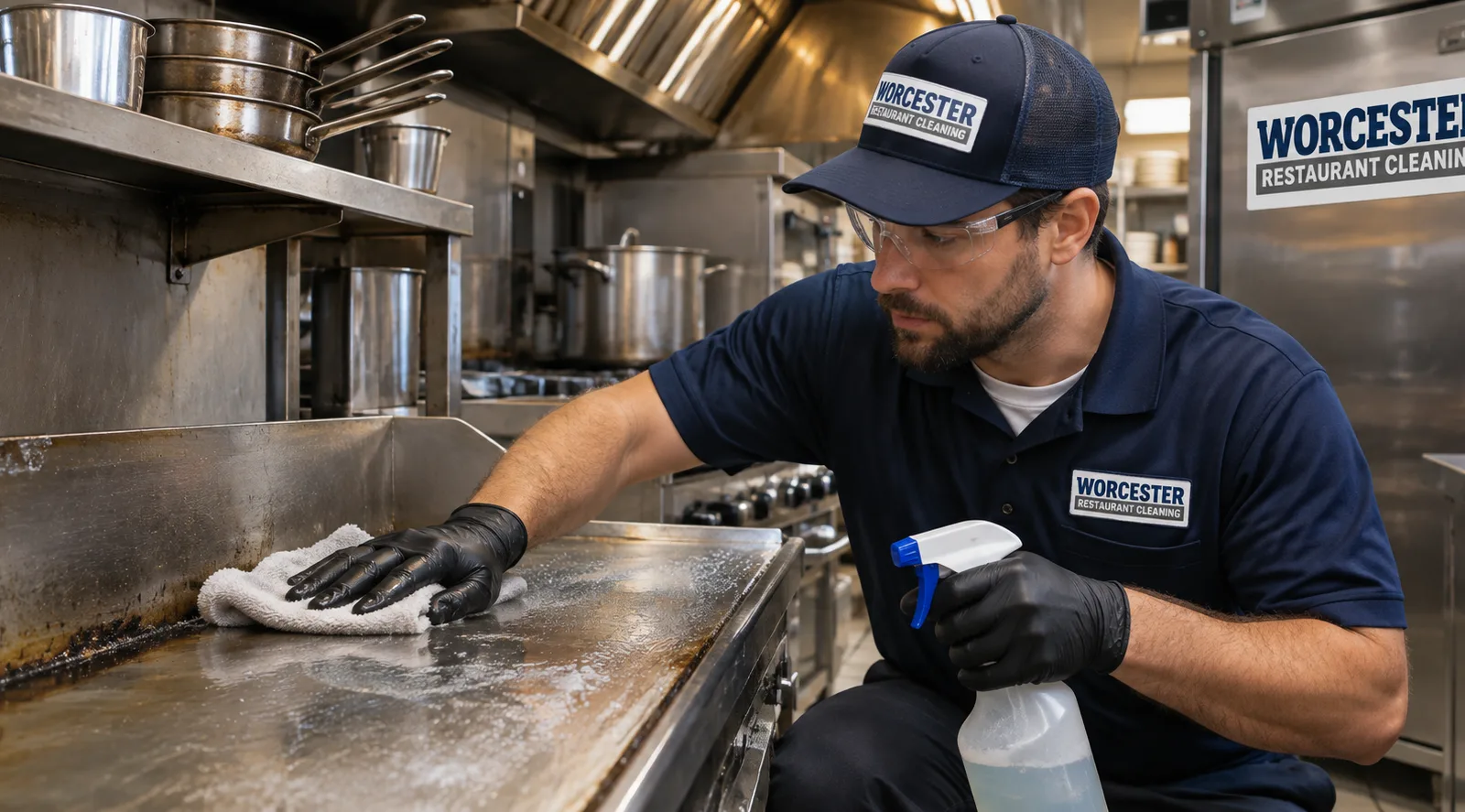
A trained cleaner degreasing stainless steel cooking equipment in an active commercial restaurant kitchen in Shrewsbury, Massachusetts.
Equipment Cleaning · Shrewsbury, Massachusetts

Restaurant Equipment Cleaning In Shewsbury

Detailed cleaning for hard-working commercial kitchen equipment, with a practical scope built around your menu, operating hours, and sanitation priorities.

Defined equipment list
Surface-specific methods
Operating-hour planning
Shrewsbury restaurant service
Cooking-line equipment
Prep and cold-side areas
Focused or recurring service
Access-based scheduling
Defined kitchen scope

Dependable Restaurant Equipment Cleaning in Shewsbury

Restaurant Equipment Cleaning Shewsbury helps remove the grease, carbon, food residue, and grime that routine end-of-shift wiping can leave behind. Worcester Restaurant Cleaning develops a practical scope for cooking lines, prep equipment, sinks, refrigeration exteriors, and other accessible equipment surfaces. The work can be arranged as a focused deep clean or recurring service based on equipment use and buildup.

We are a professional restaurant company in Worcester, MA working with restaurant operators in nearby Shrewsbury who need careful service without vague expectations. Before cleaning starts, we identify the equipment included, discuss access and operating hours, and note surfaces that require special handling. That planning matters because stainless steel, painted finishes, control panels, cast-iron components, and aluminum parts cannot all be treated the same way.

Shrewsbury sits next to Worcester and has restaurant activity along major commercial routes such as Route 9. Kitchens serving steady dine-in and takeout traffic can accumulate grease quickly around fryer cabinets, range sides, casters, handles, and equipment gaps. New England winters also bring salt and tracked-in grit through receiving and service areas, so scheduling should account for floors and access routes around the equipment.
Request a Callback
Equipment-specific methods

What Commercial Kitchen Equipment Cleaning Covers

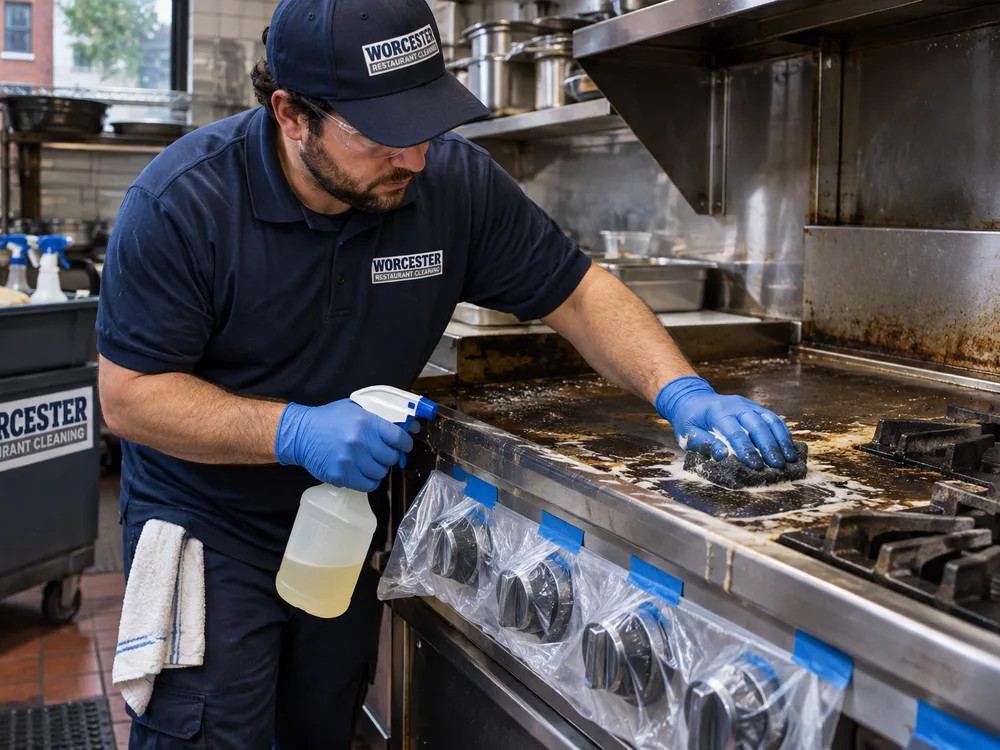
Close view of a restaurant cleaner removing baked-on grease from a commercial range while protecting control knobs and electrical components.
Methods and products should match the equipment surface, soil, and manufacturer guidance.

A clear scope separates equipment cleaning from ordinary janitorial work. Service may include accessible exterior and removable components of fryers, ranges, ovens, griddles, charbroilers, salamanders, steam tables, stainless prep tables, mixers, slicers, dishwashing equipment, sinks, reach-ins, and walk-in refrigeration surfaces. The exact list is confirmed before work begins.

Technicians first remove loose debris, then apply a degreaser or food-area-compatible cleaner suited to the surface and soil. Dwell time allows the product to soften grease before controlled agitation and wiping. Removable racks, trays, filters, and guards may be cleaned separately when the manufacturer permits it. Surfaces are then rinsed or wiped as required so chemical residue is not left behind.

Sensitive controls, electrical connections, pilot assemblies, heating elements, data plates, and door gaskets require restraint. Cleaners should not flood electrical equipment or dismantle gas and electrical systems. Equipment repair, internal mechanical service, fire-suppression work, and exhaust-system cleaning are separate scopes and should be handled by appropriately qualified providers.

The agreed equipment list defines accessible surfaces, preparation needs, manufacturer restrictions, exclusions, and the service window before cleaning begins.

Kitchen cleaning priorities

Equipment and Areas We Can Address

Cooking-Line Equipment

Degreasing may cover accessible surfaces on ranges, fryers, griddles, charbroilers, ovens, steamers, and warming equipment. Particular attention is given to knobs, ledges, splash areas, legs, and casters where residue collects.

Preparation Equipment

Prep tables, mixer exteriors, slicer components, work shelves, and food-contact parts can be included when safe access and manufacturer cleaning instructions allow. Equipment is left ready for the restaurant's required sanitation procedure.

Cold-Side Equipment

Reach-in doors, handles, hinges, gaskets, shelving, compressor-area exteriors, and accessible walk-in surfaces can be cleaned. Refrigeration coils or internal mechanical systems require a separately approved scope.

Warewashing Areas

Dish machines, stainless sinks, drainboards, scrap tables, and surrounding splash zones often develop mineral film and food residue. Products are selected with stainless finishes, gaskets, and connected components in mind.

Under and Behind Equipment

When equipment can be moved safely, cleaning can address wall edges, floor areas, sides, and neighboring surfaces. Heavy or hard-connected units may require restaurant staff or a qualified technician to reposition them.

High-Touch Surfaces

Handles, latches, controls, cart rails, shelving edges, and frequently handled equipment surfaces can be added to the cleaning checklist. This supports a more consistent closing or periodic deep-clean routine.

From equipment list to review

How Restaurant Cleaning in Shewsbury Is Planned

  1. Step 1 of 5

    Confirm the Equipment List

    We identify each appliance or work area included in the job, note manufacturer restrictions, and separate routine cleaning from work that requires technical disassembly. Photos or an on-site review can help define the scope.

  2. Step 2 of 5

    Coordinate Shutdown and Access

    The restaurant selects a workable service window. Equipment should be cool, food should be removed or protected, and staff should confirm which gas, electrical, or water connections may be shut off. Only authorized people should operate utility shutoffs.

  3. Step 3 of 5

    Protect and Prepare the Work Area

    Loose debris is collected, adjacent food and utensils are secured, and sensitive components are protected. Floors may be covered or managed to contain loosened grease and cleaning solution.

  4. Step 4 of 5

    Clean by Surface and Soil Type

    Technicians use controlled application, appropriate dwell time, hand detailing, non-damaging pads, and scraping tools suitable for the finish. Carbon deposits may need repeated treatment rather than aggressive abrasion.

  5. Step 5 of 5

    Review the Completed Scope

    Included equipment is checked against the agreed list. Any inaccessible area, damaged gasket, loose component, or heavy deposit that needs repair or another visit is reported so the operator can decide the next step.

Sanitation support and visibility

Why Detailed Equipment Cleaning Matters

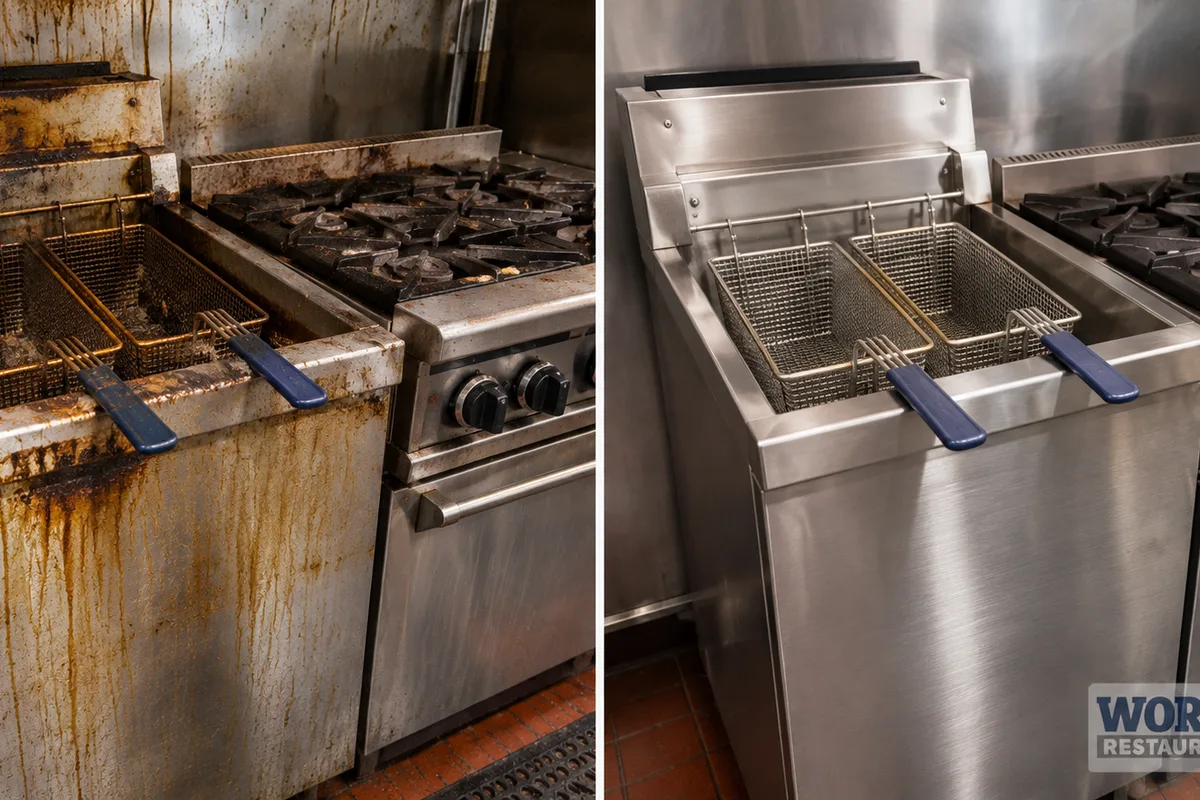
Side-by-side view of the same commercial fryer and adjacent range before cleaning with visible grease, and after detailed exterior cleaning with residue removed.
A matched before-and-after view should show the actual equipment and the same camera angle.

Grease and food residue can hold odors, attract pests, create slip concerns, and interfere with daily inspection of equipment. Removing buildup also makes damaged seals, corrosion, loose hardware, and leaking components easier for restaurant staff to spot. Cleaning does not replace preventive maintenance, but it gives managers and technicians a clearer view of equipment condition.

Professional work is especially useful before an opening, after a menu change, during a seasonal deep clean, or when a kitchen's regular closing routine cannot reach equipment sides and undersides. A written checklist helps managers verify what was cleaned and what remained outside the scope.

Massachusetts food establishments operate under state and local food-safety oversight. Cleaning should support the restaurant's own sanitation plan, equipment instructions, and applicable requirements. It should never be represented as a guarantee of inspection results because compliance also depends on food handling, temperatures, pest control, employee practices, and facility conditions.

Frequency and operating fit

Choosing the Right Cleaning Schedule

The best schedule depends on cooking volume, menu, equipment type, and the restaurant's daily cleaning program. Fryers and charbroilers tend to create heavier airborne and splattered grease than cold preparation equipment. Open-flame cooking can also bake residue onto neighboring stainless steel. Equipment used throughout long operating hours may need more frequent detailed attention than backup appliances.

Recurring service works best when it complements daily staff duties. Employees can continue wiping spills, cleaning approved food-contact parts, and following closing checklists. A periodic crew can then address heavy buildup, difficult access points, and grouped equipment during a planned shutdown. The frequency can be adjusted after the first visit based on how quickly soil returns.

For Shrewsbury restaurants, service timing should account for deliveries, late closing hours, breakfast preparation, and shared access in commercial properties. Worcester Restaurant Cleaning can define a repeatable equipment list so managers know which tasks belong to staff and which are included during each professional visit.

Request a Callback

A defined equipment list, suitable service window, and surface-specific cleaning plan make it easier to maintain the kitchen without disrupting food preparation.

Call for a Free Quote
Scope, timing, and preparation

Restaurant Equipment Cleaning Questions

How much does restaurant equipment cleaning in Shewsbury cost?

Pricing depends on the number and type of appliances, grease level, access, required labor, and whether equipment can be moved safely. A small group of accessible units costs less than a full cooking line with carbon buildup and confined gaps. The most useful estimate is based on an equipment list, photos, or an on-site review, followed by a written scope.

Can equipment be cleaned while our restaurant is open?

Some exterior cleaning may be possible during quiet hours, but cooking equipment generally needs to be shut down and cool before detailed work starts. Food, utensils, and active preparation must remain protected. Shrewsbury operators often schedule deeper work after closing or during a planned non-service period so the crew can work safely.

How long does commercial equipment cleaning take?

A focused group of appliances may take several hours, while a heavily soiled line or larger kitchen can require a longer service window. Cooling time, movable equipment, baked-on carbon, removable parts, and access behind units affect the duration. The estimated window is confirmed after the equipment and condition are reviewed.

Do you clean inside fryers, ovens, and refrigeration equipment?

Accessible interiors and manufacturer-approved removable parts may be included when the equipment is safely shut down and the scope is agreed in advance. Technical disassembly, refrigeration-system work, gas repairs, electrical work, and cleaning that conflicts with manufacturer guidance are excluded. Internal oil handling or food disposal should also be discussed before scheduling.

Will professional cleaning make us pass a health inspection?

No cleaning provider can guarantee an inspection result. Detailed equipment cleaning can support sanitary conditions by removing accessible grease and food residue, but inspectors may also assess food temperatures, storage, employee hygiene, pest activity, warewashing, and facility maintenance. Restaurants remain responsible for their complete food-safety program.

What should our staff do before the crew arrives?

Staff should remove or protect food, clear utensils and smallwares, identify the included equipment, and allow hot appliances to cool. Managers should also disclose damaged components and confirm access to loading, waste, water, and electrical areas. Only authorized personnel should disconnect or reconnect hard-wired, gas-fed, or plumbed equipment.

Can recurring Restaurant Cleaning in Shewsbury be scheduled around operating hours?

Recurring work can be planned around a restaurant's established closing, preparation, and delivery schedule. The practical interval depends on the menu and how quickly grease returns. Using the same checklist at each visit gives managers a consistent scope while allowing occasional additions for seasonal or heavily used equipment.

Plan a Cleaner, More Manageable Kitchen

Tell Worcester Restaurant Cleaning which equipment needs attention, when your kitchen can be accessed, and where buildup is causing concern. We will help define a practical scope for your Shrewsbury restaurant before work begins.