
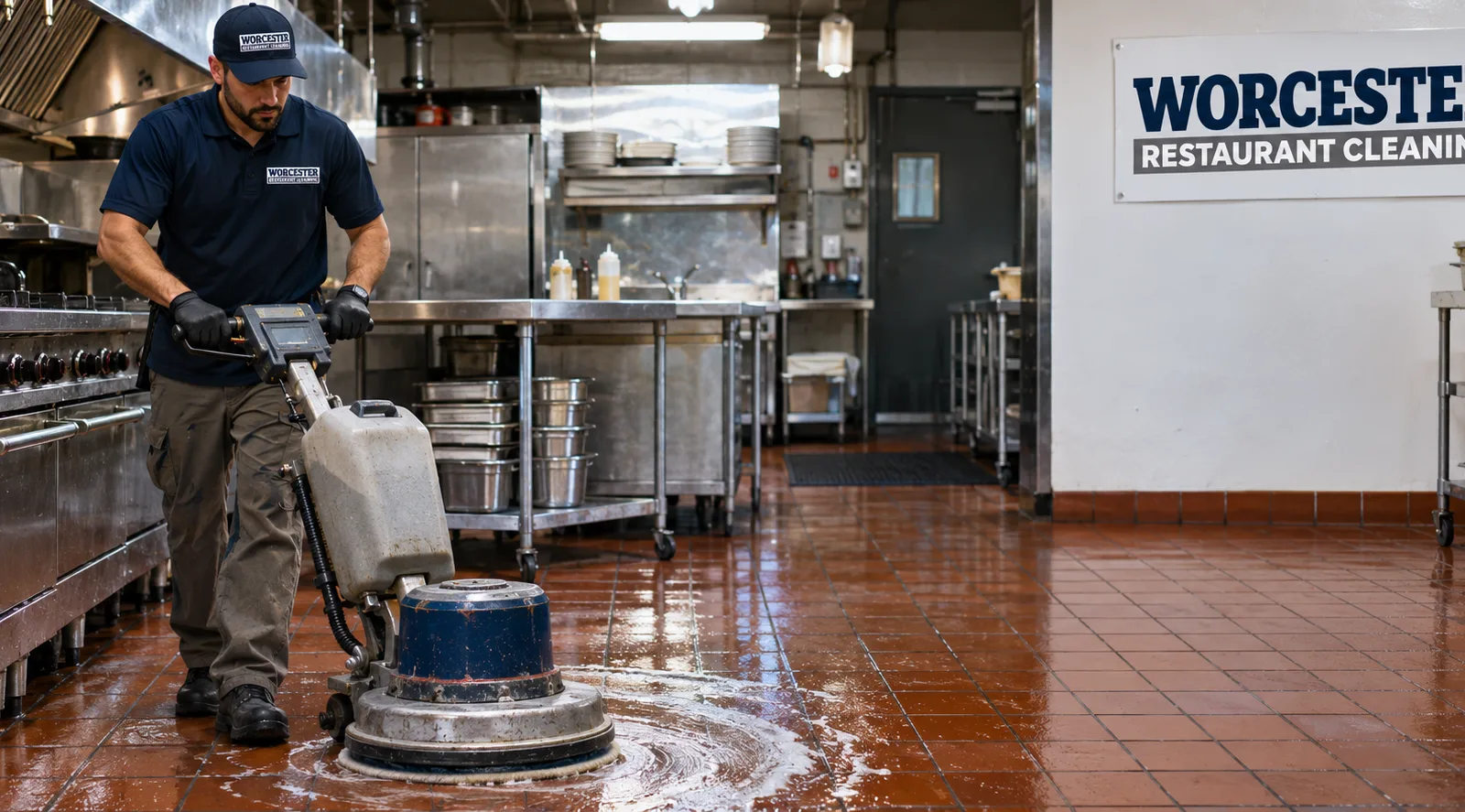
A trained cleaner using commercial floor equipment on quarry tile in a Worcester restaurant kitchen after food preparation has ended.
Kitchen Floor Cleaning · Worcester, Massachusetts

Commercial Kitchen Floor Cleaning

Professional degreasing and detailed tile and grout care for restaurant floors exposed to oil, food residue, heavy traffic, and demanding service schedules.

Floor-specific chemistry
Grease-film removal
Tile and grout care
Operating-hour planning
Commercial kitchens
Mechanical agitation
Controlled extraction
Worcester-based service
Kitchen-specific floor care

Restaurant Floor Cleaning Built Around Kitchen Conditions

Commercial Kitchen Floor Cleaning has to address more than visible dirt. Cooking oil can spread as a fine film, food residue collects along edges, and dirty solution settles into textured tile and recessed grout lines. Mopping may redistribute that material without removing the bonded grease underneath. A professional cleaning uses the right chemistry, controlled dwell time, agitation, extraction, and rinsing to leave a cleaner surface without a slick detergent film.

Worcester Restaurant Cleaning provides Worcester's local restaurant service with work planned around each kitchen's flooring, soil load, equipment layout, and operating schedule. The goal is a practical cleaning scope that reaches traffic lanes, corners, floor-to-wall transitions, and accessible areas beneath movable equipment. Before work begins, we identify the floor material, note damaged grout or loose tiles, and determine where wastewater can be handled responsibly.

Winter conditions in central Massachusetts add another concern. Salt, sand, and tracked moisture enter through delivery doors and employee entrances, then mix with kitchen grease. That abrasive residue can lodge in textured surfaces and grout. Kitchens near downtown Worcester may also have compact back-of-house layouts with narrow passages and limited equipment access, so machine selection and staging need to fit the available working space.
Request a Callback
Degreasing method

Restaurant Floor Degreasing That Removes the Film

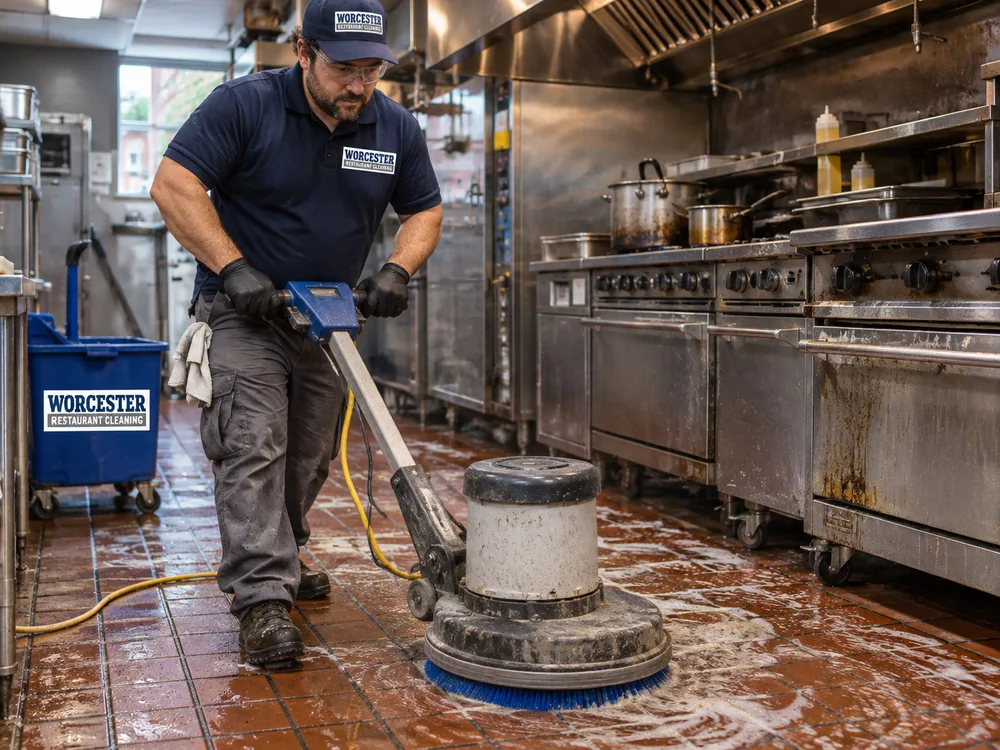
Close view of a commercial cleaner agitating greasy quarry tile and grout with a low-speed floor machine in a restaurant cook line.
Mechanical agitation helps release bonded grease that routine mopping leaves in textured tile and grout.

Restaurant floor degreasing starts with dry soil removal and the isolation of loose food debris. A compatible degreaser is then applied at the proper dilution and given enough dwell time to break down greasy soil. Agitation with a floor machine, deck brush, or suitable grout brush lifts residue from textured tile and joints. The loosened solution is recovered, followed by a controlled rinse so cleaner and soil are not left to dry on the floor.

Chemistry must match the surface. Quarry tile and many commercial ceramic floors tolerate alkaline cleaning products when used correctly, but natural stone, coated concrete, resilient flooring, and specialty finishes can require different products and methods. Stronger is not automatically better. Excessively harsh chemistry, poor dilution, or inadequate rinsing can leave residue and may affect grout, coatings, metals, or nearby equipment.

Kitchen floor degreasing also depends on access. Movable mats, carts, and light equipment should be cleared when practical. Fixed cooking lines, coolers, and shelving create edges that need hand detail work. We establish the accessible scope before cleaning so the crew can concentrate on the areas that collect the most soil without disturbing gas lines, electrical connections, or equipment that should remain in place.

A defined scope matches the cleaning method to the floor material, grease load, grout condition, equipment access, and areas where dirty solution can be recovered responsibly.

Detailed floor scope

What Restaurant Floor Cleaning Services Can Cover

Cooking-Line Traffic Areas

Targeted treatment addresses oily buildup around fryers, ranges, prep stations, and the routes employees use throughout service. Heat and repeated foot traffic can make these areas harder to clean with a mop alone.

Restaurant Tile Cleaning

Compatible products and mechanical agitation loosen soil from quarry tile, ceramic tile, and other cleanable commercial surfaces. The method is adjusted for texture, finish, and existing condition.

Restaurant Grout Cleaning

Grout joints are scrubbed to remove embedded grease and food soil where condition permits. Cracked, missing, or deteriorated grout is documented because cleaning cannot repair failed joints.

Edges and Transitions

Hand detailing addresses corners, thresholds, wall edges, and accessible spaces around equipment. These areas often collect residue outside the reach of larger floor machines.

Service and Prep Areas

The scope can include dish areas, prep rooms, dry-storage traffic lanes, and other back-of-house floors when the material and drainage conditions allow.

Recurring Maintenance

Scheduled cleaning can be planned around soil accumulation and operating demands. Frequency depends on cooking volume, menu, floor texture, daily maintenance, and delivery traffic.

From inspection to review

Our Commercial Kitchen Floor Cleaning Process

  1. Step 1 of 5

    Inspect the Floor and Access

    We identify the flooring, inspect grout and transitions, note heavily greased zones, and review access around fixed equipment. We also determine where cleaning solution can be applied and recovered without affecting food, packaging, or active work areas.

  2. Step 2 of 5

    Set the Work Area

    Loose debris is removed, practical obstructions are cleared, and nearby surfaces are protected as needed. Cleaning is coordinated for a suitable operational window so the floor can be treated without kitchen traffic crossing the work.

  3. Step 3 of 5

    Apply Degreaser and Allow Dwell Time

    A surface-compatible product is mixed for the observed soil and applied methodically. Dwell time gives the chemistry a chance to loosen grease before agitation, but the solution is not allowed to dry on the floor.

  4. Step 4 of 5

    Agitate Tile, Grout, and Edges

    Mechanical equipment treats open areas while brushes address grout, corners, thresholds, and accessible edges. Extra passes may be needed where grease has bonded to textured flooring.

  5. Step 5 of 5

    Recover, Rinse, and Review

    Dirty solution is recovered rather than pushed toward another area. The floor is rinsed as appropriate, excess moisture is removed, and the cleaned zones are reviewed before the work area is returned to use.

Tile and grout condition

Restaurant Tile and Grout Need Different Attention

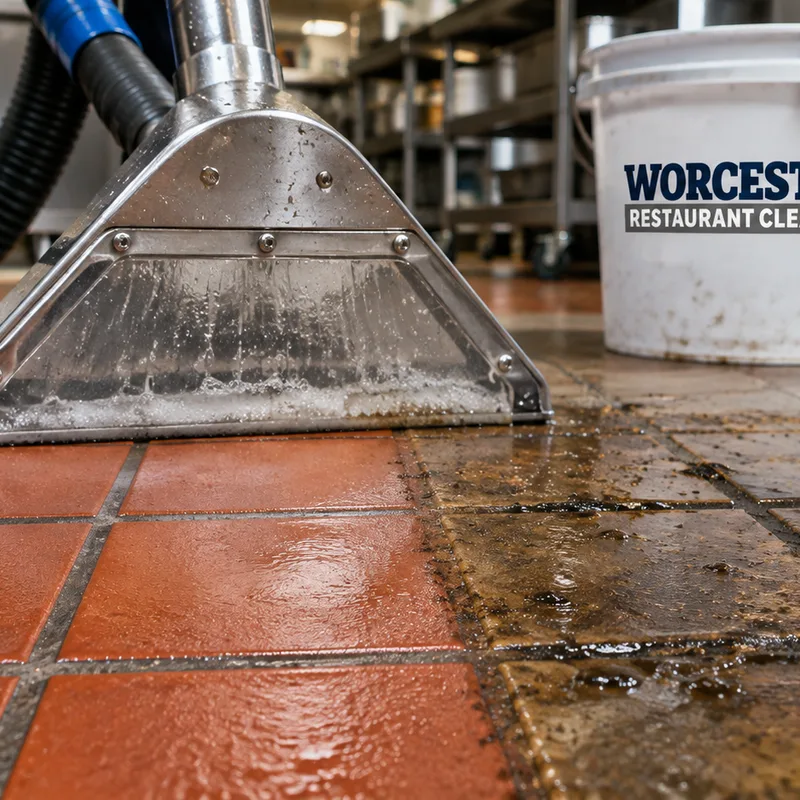
Detailed view of restaurant quarry tile with one area of grout professionally scrubbed and extracted while the adjoining area still shows greasy buildup.
A test area can distinguish removable soil from staining, wear, or damaged grout.

Tile and grout do not soil in the same way. Tile presents a broad wear surface, while recessed grout lines collect liquid, fine food particles, and greasy residue. Dark grout is not always dirty grout. Age, wear, staining, previous coatings, and repairs can create permanent color variation. A test area helps set realistic expectations before full restaurant grout cleaning begins.

Quarry tile is common in commercial kitchens because its textured surface supports traction, but that texture also holds soil. Improper detergent concentration can leave a film that attracts more dirt. Grout that is cracked, powdering, or missing needs repair rather than increasingly aggressive scrubbing. Cleaning can reveal the condition of a joint; it cannot restore material that has physically failed.

A safer floor also depends on daily operating practices. Spills should be addressed promptly, mops and solution should be kept clean, and wet-floor controls should remain in place until the surface is dry. Professional cleaning supports that routine by removing accumulated residue, but it does not replace spill response or guarantee that a wet or contaminated floor cannot be slippery.

Local scheduling fit

Planning Restaurant Floor Cleaning in Worcester

A useful service plan begins with operations. The best cleaning window may be after closing, before preparation begins, or during a scheduled shutdown. The floor needs time for treatment, extraction, inspection, and drying before employees resume normal traffic. Restaurants around the Canal District may have active delivery routes and compact service access, while downtown locations can present tighter loading and parking arrangements. Those conditions affect crew staging and equipment movement, so they should be discussed before scheduling.

Commercial floor cleaning in Worcester also needs to account for the path between exterior doors and food-production areas. During snowy or icy weather, deicing material and grit can travel farther into a building than expected. Entry mats and routine dry-soil removal help keep that abrasive material from mixing with grease. Professional cleaning should then focus on the bonded residue that remains after normal upkeep.

A written scope should identify included rooms, accessible equipment edges, the expected floor condition, scheduling constraints, and known damage. It should also clarify whether the request is for a one-time restorative cleaning or recurring maintenance. That distinction affects product choice, labor, and how much improvement is reasonable during one visit.

Request a Callback
Pricing factors

How Much Does Commercial Kitchen Floor Cleaning Cost in Worcester?

Commercial kitchen floor cleaning in Worcester typically ranges from about $300 to $900 for a smaller or moderately sized restaurant kitchen, while large, heavily soiled, or multi-area work may run $900 to $2,000 or more. These are general planning ranges, not fixed quotes.

Final price depends on square footage, grease buildup, floor material, grout condition, equipment access, drainage, required hand detailing, and whether service is one-time or recurring. Scheduling outside normal working hours may also affect labor. The exact cost is confirmed after the kitchen and requested scope are reviewed.

Request a Callback

Get a clear cleaning scope based on your floor material, grease level, access, and operating schedule before work is booked.

Call for a Free Quote
Scope, timing, and floor care

Restaurant Floor Cleaning Worcester FAQs

How long does restaurant floor cleaning take?

Many restaurant kitchens require several hours for preparation, degreasing, agitation, extraction, rinsing, and initial drying. The actual duration depends on floor area, soil level, grout detail, access around equipment, and the number of rooms included. A compact downtown Worcester kitchen may have less open machine space than a larger freestanding location, which can increase hand work.

Can you clean the floor without moving heavy kitchen equipment?

Yes, accessible flooring can be cleaned without disconnecting or moving heavy fixed equipment. Crews can detail exposed edges and reachable spaces, but they should not disturb gas, electrical, refrigeration, or plumbing connections. If cleaning beneath a fixed line is required, equipment movement must be arranged safely before service and included in the agreed scope.

Will restaurant grout cleaning make every joint the same color?

No, cleaning cannot guarantee uniform grout color because permanent staining, wear, repairs, coatings, and material deterioration may remain after soil is removed. A test area can show how the grout responds. Missing, cracked, or powdering joints require repair, and aggressive cleaning is not a substitute for replacing failed grout.

How often should a commercial kitchen floor be professionally degreased?

The right frequency depends on cooking volume, grease production, floor texture, traffic, and the effectiveness of daily cleaning. Fry-heavy kitchens may need professional degreasing more often than low-grease preparation spaces. Worcester winters can also add salt, sand, and moisture near receiving or employee entrances, so seasonal soil should be considered when setting the schedule.

Can cleaning be scheduled outside restaurant operating hours?

Scheduling can be planned around a suitable closed or low-activity period, subject to availability and the scope of work. The kitchen must be clear enough for treatment, and employees should stay off wet areas until the floor is ready for traffic. Preparation, drying needs, building access, and alarm or loading procedures should be confirmed in advance.

Do you clean tile floors in dining rooms and service areas too?

Those areas can be included when they are part of the agreed commercial floor cleaning scope and the surface is suitable for the proposed method. Dining rooms may require different chemistry or equipment than greasy kitchen quarry tile, especially when the floor has a coating, polished finish, or resilient material. Each distinct surface should be identified during the initial review.

Plan a Cleaner Kitchen Floor

Tell Worcester Restaurant Cleaning about the floor material, affected areas, grease buildup, and preferred service window. We will help define a practical scope for one-time or recurring cleaning.