
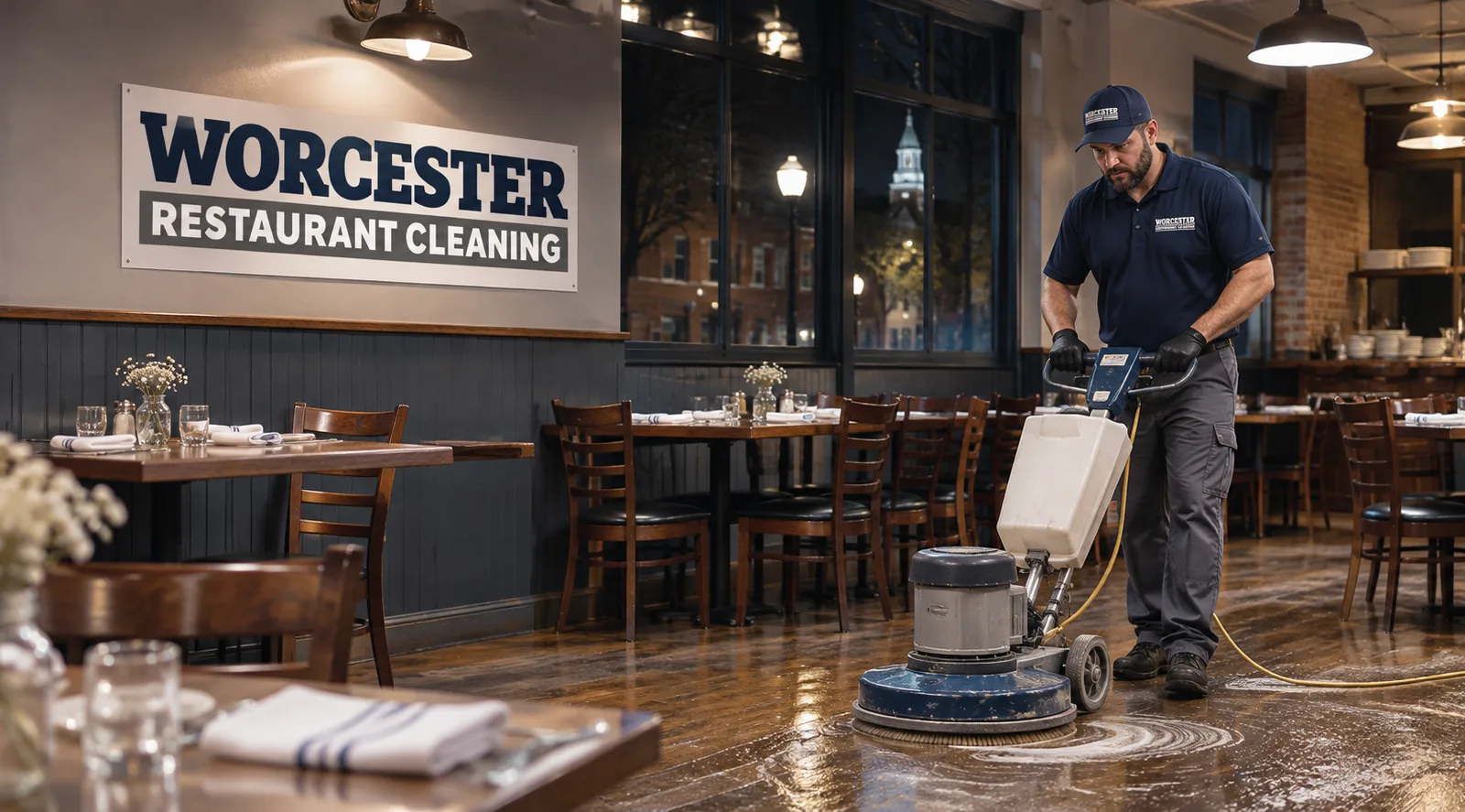
A professional cleaner using a floor machine in a Milford restaurant dining room after closing, with tables arranged for service and no customers present.
Restaurant Cleaning · Milford, Massachusetts

Restaurant Cleaning Services in Milford

Keep your kitchen, dining room, restrooms, and floors ready for the next service with a cleaning plan built around your hours and operating standards.

Kitchen-specific scope
Surface-specific methods
Operating-hour planning
Written task lists
Kitchens and prep areas
Dining rooms and bars
Restrooms and entries
Recurring or project work
Built around restaurant operations

Dependable Restaurant Cleaning That Fits Your Operation

Restaurant Cleaning Services Milford should support the way your restaurant actually operates. Worcester Restaurant Cleaning develops recurring and project-based scopes around your hours, traffic, surfaces, and priorities. That may mean overnight cleaning after the kitchen closes, early-morning work before deliveries arrive, or selected tasks on quieter days.

Our restaurant crew around Worcester, MA handles restaurant work with clear task lists and practical attention to food-service conditions. Grease film, tracked-in grit, crumbs beneath fixed equipment, fingerprints on high-touch surfaces, and residue around waste areas each require the right method. We separate front-of-house and back-of-house tasks, use appropriate tools for each area, and plan the order of work to avoid carrying kitchen soil into guest spaces.

Milford's location near Interstate 495 and Route 16 supports restaurants serving local residents, commuters, and travelers. Traffic can change sharply by day and meal period, so a rigid cleaning window is not always useful. A tailored schedule gives managers room to protect opening preparation, closing duties, deliveries, and special events.
Request a Callback
Front and back of house

What Restaurant Cleaning Services Milford Can Cover

Commercial Kitchen Areas

Cleaning can address accessible cook-line surroundings, prep surfaces, sinks, backsplashes, equipment exteriors, shelving, and floors. Degreasing methods are selected for the soil level and surface rather than applying one chemical throughout the kitchen.

Dining Rooms and Bars

Tables, chairs, booths, bar exteriors, partitions, ledges, and high-touch points receive careful attention. Work is planned to preserve finished wood, upholstery, metal, glass, and other guest-facing materials.

Floor Care

Vacuuming, mopping, scrubbing, and periodic detail work can be matched to tile, resilient flooring, sealed concrete, and carpet. Edges, corners, transitions, and areas beneath movable furnishings are included when the agreed scope calls for them.

Restrooms

Fixtures, partitions, mirrors, counters, dispensers, touchpoints, and floors can be cleaned and disinfected. Consumable restocking can also be built into the checklist when supplies and responsibilities are agreed in advance.

Entry and Waiting Areas

Door glass, handles, host stations, mats, and surrounding floors collect visible soil quickly. Winter salt and wet grit common in Massachusetts require prompt removal because residue can dull floors and spread through dining areas.

Waste and Service Areas

Cleaning around interior bins, utility spaces, and designated waste routes helps control spills and residue. The scope can identify who removes waste, who replaces liners, and which exterior areas are included.

A defined scope separates routine restaurant cleaning from specialized exhaust, equipment, drain, and pest-control work before service begins.

Surface and food-safety considerations

Kitchen Cleaning Requires a Defined Scope

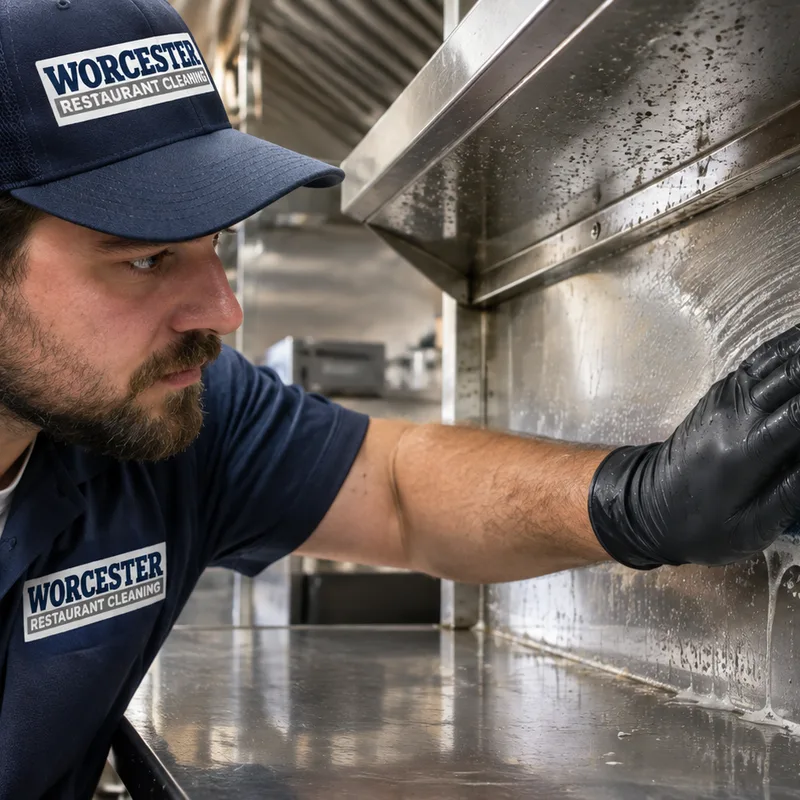
Close view of a cleaner degreasing an accessible stainless-steel prep-area backsplash in a commercial restaurant kitchen while food and utensils are safely removed.
Surface-specific tools and products help remove grease without treating every kitchen material the same way.

A restaurant kitchen is not cleaned effectively with a generic office checklist. Protein residue, cooking oils, carbonized deposits, flour dust, and food debris behave differently. The cleaning plan should identify the surfaces involved, compatible degreasers, required dwell time, agitation method, and rinse or recovery procedure. Safety data sheets should be available for cleaning products, and chemicals must be used according to their labels.

Routine janitorial cleaning is also different from specialized exhaust-system service. Accessible hood exteriors may be included in a regular scope, but internal hood, duct, and fan cleaning is specialized work and should be identified separately. The same clarity applies to equipment interiors, refrigeration coils, pest-control work, and drain service. Defining these boundaries before work begins prevents missed expectations.

Food-contact surfaces need particular care. Products must be suitable for the intended use, and any required cleaning, rinsing, sanitizing, and air-drying steps should follow the product label and the restaurant's food-safety procedures. Worcester Restaurant Cleaning coordinates the work plan with management so cleaned areas are turned over in a practical order.

From walkthrough to review

How We Build Your Restaurant Cleaning Plan

  1. Step 1 of 5

    Walk Through the Restaurant

    We review the kitchen, dining spaces, bar, restrooms, entrances, floors, storage access, and waste route. The walkthrough also identifies delicate finishes, equipment restrictions, alarm procedures, and realistic working hours.

  2. Step 2 of 5

    Define Tasks and Frequency

    Each task is assigned a frequency such as every visit, weekly, monthly, or by request. The written scope states which spaces and surfaces are included, along with exclusions that require separate authorization or a specialist.

  3. Step 3 of 5

    Set Access and Safety Procedures

    Management confirms entry arrangements, lockup responsibilities, chemical-storage rules, wet-floor controls, and any areas that remain restricted. Work around hot equipment or active food preparation is scheduled only when conditions allow safe cleaning.

  4. Step 4 of 5

    Complete and Document the Work

    The crew follows the agreed order and checklist. Any access problem, damaged surface, unusual buildup, or task that cannot be completed safely is reported rather than concealed.

  5. Step 5 of 5

    Review and Adjust

    Restaurant traffic and operating hours change. The scope can be updated when a new menu creates heavier grease, patio season changes floor traffic, or private events add pressure to guest areas.

Planning ranges and final scope

How Much Does Restaurant Cleaning Cost in Milford?

Recurring restaurant cleaning in Milford typically costs about $250 to $700 per visit, while larger kitchens, deep cleaning, or heavy grease removal may run from $700 to $2,000 or more. These are general planning ranges, not a fixed quote.

Final price depends on square footage, visit frequency, kitchen condition, floor types, equipment access, restroom count, working hours, and the exact task list. Recurring work may be priced differently from a one-time reset. The exact cost is confirmed after a walkthrough and written scope.

Request a Callback
Clear tasks and documented exceptions

Restaurant Cleaning Milford Managers Can Verify

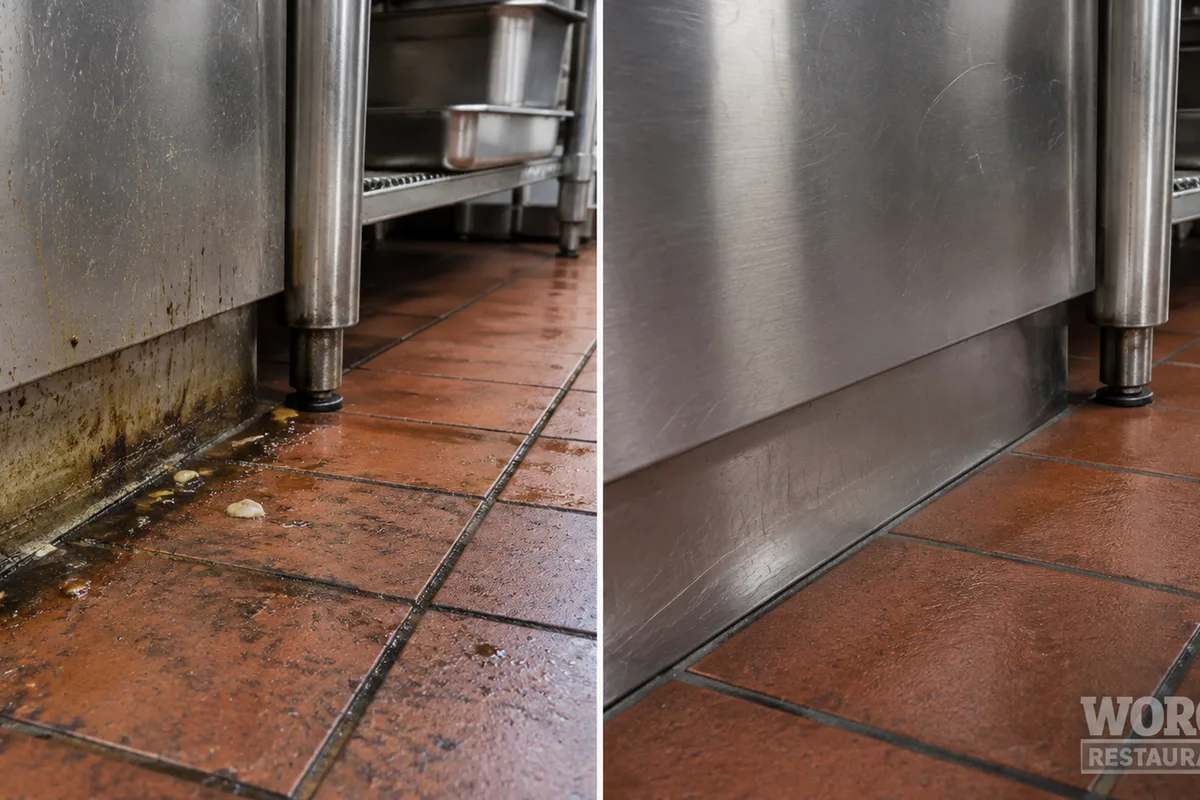
A realistic side-by-side view of the same commercial kitchen floor edge before cleaning with greasy soil and after machine scrubbing, with no exaggerated color changes.
Detail work along edges and equipment lines addresses buildup that routine center-floor mopping can miss.

A useful cleaning agreement tells both the manager and the crew what completion looks like. Broad promises such as “clean the kitchen” leave too much open to interpretation. A better scope names the work: scrub quarry-tile floors, wipe equipment exteriors, clean splash zones, remove debris beneath movable mats, disinfect restroom touchpoints, or clean interior entrance glass.

Managers should also know how exceptions are handled. A locked room, active cooking station, unstable stack of supplies, or equipment that cannot be moved may block a task. Reporting that condition creates a record and lets the restaurant correct access before the next visit. Periodic reviews can then address repeat trouble spots instead of allowing them to fall outside the routine.

Milford restaurants also face seasonal floor-care demands. Snow, slush, deicing residue, and sand enter through doorways during Massachusetts winters. Entry mats capture part of that soil, but frequent vacuuming and floor cleaning are needed to limit residue and reduce slippery conditions. Rainy periods and outdoor dining can also change how often entrances, service paths, and dining floors need attention.

A walkthrough can turn general cleaning concerns into a written task list, practical schedule, and clear price for your Milford restaurant.

Call for a Free Quote
Scope, scheduling, and safety

Questions About Restaurant Cleaning in Milford

Can restaurant cleaning be scheduled after closing?

Yes, cleaning can be planned for after closing when access, lockup, alarms, and completion deadlines are agreed in advance. Milford restaurants often need work fitted around late service, early deliveries, or morning food preparation, so the walkthrough should establish a window that gives the crew enough time to work safely.

How often should a Milford restaurant be professionally cleaned?

The right frequency depends on meal volume, cooking methods, floor traffic, staffing duties, and the condition standard the restaurant wants to maintain. High-use restrooms, kitchen floors, entrances, and dining touchpoints may need attention every service day, while detailed edge work, high dusting, or machine floor care can follow a weekly or periodic rotation.

Do you clean while the kitchen is operating?

Cleaning around active cooking is limited to tasks that can be performed without exposing workers to hot equipment, interfering with food preparation, or creating slip and chemical risks. Grease removal and wet floor work are generally better scheduled once the relevant station is shut down, cooled, cleared, and released by restaurant staff.

Are cleaning products safe for restaurant surfaces?

Products should be selected for the specific soil, surface, and intended use, then applied according to the label. Stainless steel, finished wood, natural stone, resilient flooring, and food-contact surfaces do not all tolerate the same chemicals. The initial Milford walkthrough helps identify materials and any manufacturer restrictions.

Does regular service include hood and exhaust duct cleaning?

Internal hood, duct, and exhaust-fan cleaning should not be assumed to be part of routine restaurant cleaning. It is specialized work with its own access and service requirements. An agreement may cover accessible hood exteriors, but internal exhaust components must be listed separately and assigned to an appropriate provider.

How quickly can recurring Restaurant Cleaning Services Milford begin?

A start date depends on walkthrough availability, the size and condition of the restaurant, access arrangements, and the requested cleaning window. A heavily soiled location may benefit from an initial deep clean before recurring service starts, while a maintained dining room and kitchen may move directly to the regular checklist.

What should a restaurant manager prepare for the walkthrough?

Prepare a list of priority areas, current staff-cleaning duties, preferred service times, restricted equipment, surface concerns, and any tasks handled by separate vendors. Access to the full Milford premises during the walkthrough allows the proposed scope to account for storage rooms, service corridors, restrooms, entrances, and waste routes.

Build a Cleaning Plan Around Your Restaurant

Tell Worcester Restaurant Cleaning about your operating hours, priority areas, and current challenges. We will help define a practical scope for the kitchen and guest areas before service begins.