
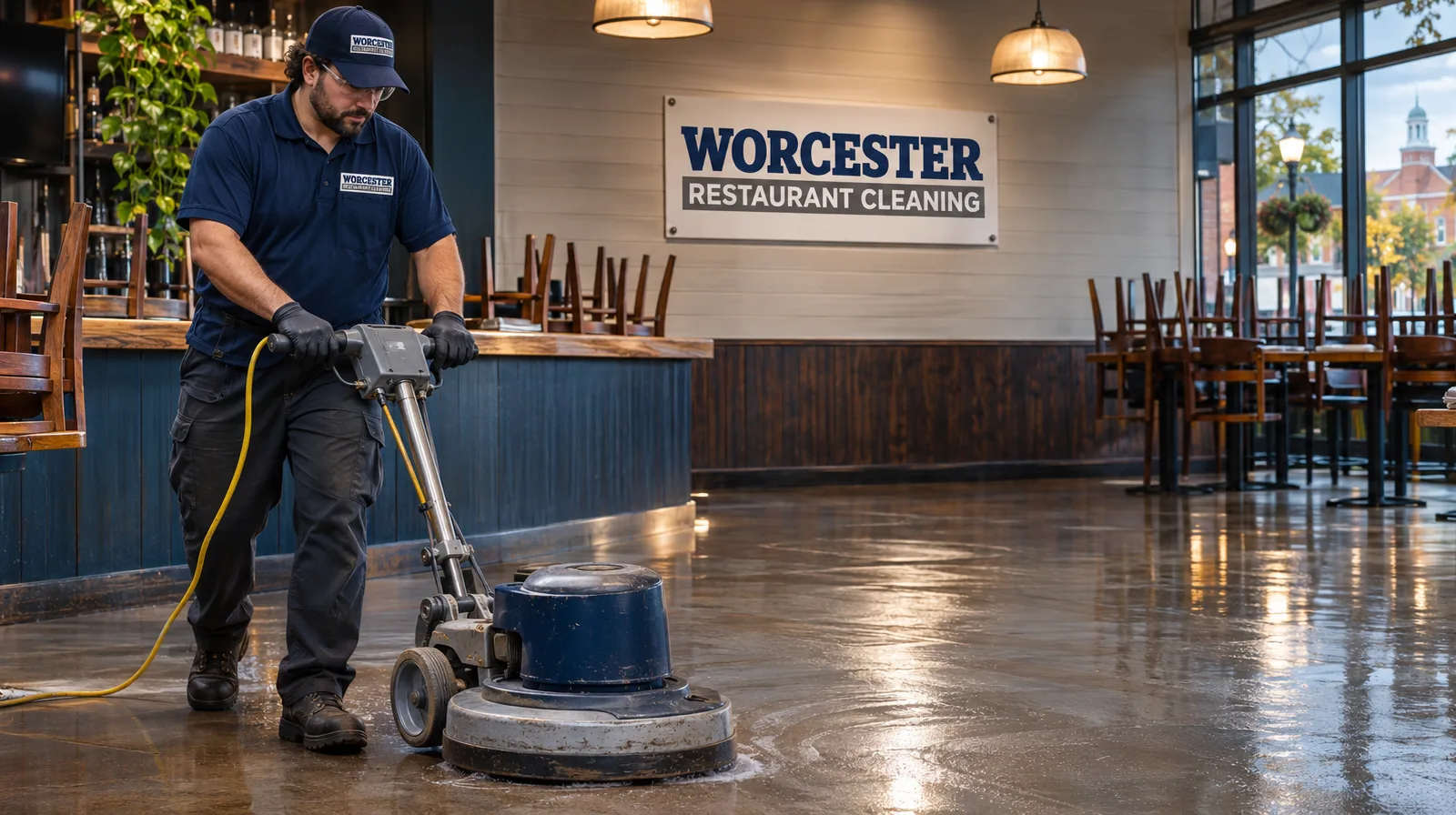
A professional cleaner using commercial equipment on the floor of a polished Framingham restaurant after service.
Restaurant Cleaning · Framingham, Massachusetts

Restaurant Cleaning Framingham

Dependable care for dining rooms, food-preparation areas, floors, fixtures, and high-touch surfaces, scheduled around your operating hours.

Written task scope
Kitchen-specific methods
Operating-hour planning
MetroWest service
Dining and guest areas
Back-of-house cleaning
Detailed floor care
Access-based scheduling
Built around restaurant operations

Restaurant Cleaning Framingham Businesses Can Schedule Around Service

Restaurant Cleaning Framingham should support daily operations rather than interrupt them. Worcester Restaurant Cleaning develops recurring and one-time cleaning plans around each restaurant's hours, layout, equipment, and sanitation priorities. The scope can cover customer-facing areas, back-of-house work zones, restrooms, entries, and employee spaces.

Our team approaches this work as restaurant specialists serving Worcester, MA who understand the pace and practical demands of food-service properties across MetroWest. Framingham restaurants near Route 9 may handle steady customer traffic and frequent floor soil, while downtown businesses may have tighter access, compact storage, or mixed-use neighbors. Those conditions affect arrival planning, equipment selection, and how supplies are staged.

Every useful plan identifies the areas being cleaned, the expected frequency, the tasks included, and any access instructions. That written scope gives managers a clear basis for reviewing work and requesting adjustments as business volume, menus, or operating hours change.
Request a Callback
Back-of-house care

Commercial Kitchen Cleaning in Framingham

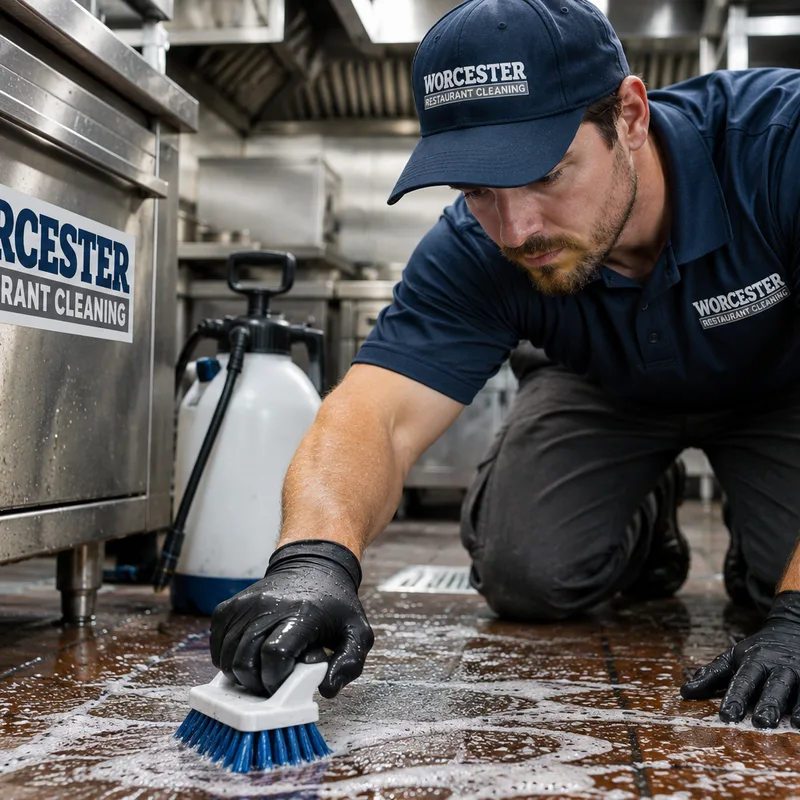
A trained cleaner degreasing a commercial kitchen floor beside stainless-steel prep equipment, with food and utensils removed from the work area.

Commercial Kitchen Cleaning Framingham requires a task-specific approach. Grease films, food residue, carbon deposits, and tracked soil respond to different products and methods. A degreaser that is appropriate for a quarry-tile floor may be unsuitable for aluminum, painted surfaces, or certain equipment finishes. Product labels, safety data sheets, equipment instructions, and required dwell times guide the work.

Back-of-house cleaning can include accessible floors, walls, baseboards, stainless-steel exteriors, shelving, sinks, prep surfaces, and the exterior surfaces of cooking equipment. Floor care may involve dry soil removal, degreasing, agitation, edge work, and wet recovery. Attention to corners and the spaces beneath movable equipment helps address residue that ordinary mopping can leave behind.

Food-contact surfaces require special handling. Cleaning removes soil; sanitizing is a separate step performed with an appropriate product at its labeled concentration and contact time. Cleaners should also avoid cross-contamination by separating tools used in kitchens, dining areas, and restrooms. Staff should keep food, utensils, and exposed ingredients protected or removed while work is underway.

A defined restaurant cleaning plan separates routine duties from periodic detail work and identifies the approved areas, methods, access requirements, and service frequencies.

Restaurant-wide scope

What a Restaurant Cleaning Plan Can Cover

Dining and Guest Areas

Tables, chairs, ledges, partitions, doors, entry glass, high-touch points, and accessible fixtures can be cleaned after guests leave. Floor care is matched to the material, whether the room has resilient flooring, tile, sealed concrete, or carpet.

Back-of-House Areas

Prep zones, cook-line surroundings, dishwashing areas, washable walls, accessible shelving, and equipment exteriors can be included. The scope should distinguish routine cleaning from periodic detail work and identify which equipment may be moved safely.

Restrooms and Employee Spaces

Restrooms need dedicated tools, attention to touchpoints, fixture cleaning, floor care, and replenishment tasks when supplies are provided. Break areas, offices, lockers, and employee entrances can be added to the same service plan.

Detailed Floor Care

Edges, grout lines, mats, thresholds, and areas beneath movable items often need more than a quick mop. The method should account for grease load, slip risk, floor finish, drainage, and the manufacturer's care instructions.

Periodic Deep Cleaning

Scheduled detail work can address buildup on reachable vents, walls, baseboards, legs, casters, shelving, and other overlooked surfaces. Frequency depends on cooking volume, menu, ventilation, staffing, and the effectiveness of daily in-house routines.

Opening and Closing Support

Cleaning can be arranged after closing, before opening, or during another approved access window. Managers receive a defined task list so work can be checked before the next service period.

From walkthrough to review

How We Build and Maintain the Cleaning Program

  1. Step 1 of 4

    Walk Through the Restaurant

    We review the dining room, kitchen, restrooms, storage access, floor materials, loading options, and any areas with recurring buildup. Managers can identify priority surfaces, restricted equipment, alarm procedures, and timing constraints.

  2. Step 2 of 4

    Define Tasks and Frequencies

    Routine and periodic duties are separated into a written scope. Daily needs may differ from weekly edge work or scheduled detail cleaning. This keeps expectations clear and helps prevent occasional tasks from being mistaken for every-visit duties.

  3. Step 3 of 4

    Plan Safe Access

    The plan addresses keys, entry points, occupied areas, wet-floor controls, chemical storage, and where cleaning equipment can be set up. In compact downtown Framingham properties, careful staging can be especially important when corridors or storage rooms are shared.

  4. Step 4 of 4

    Complete and Review the Work

    The crew follows the approved sequence, typically moving from cleaner areas toward heavier soil and keeping restroom tools separate. Feedback from managers is used to correct concerns and refine the task list when operating conditions change.

Local access and conditions

Built for Framingham's Operating Conditions

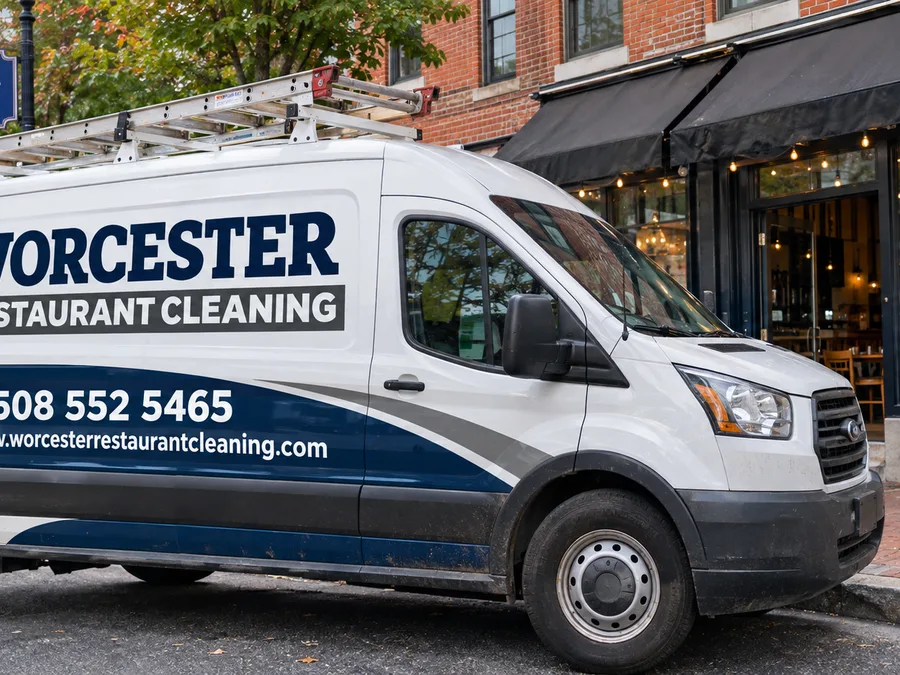
A commercial cleaning crew arriving with compact floor-care equipment at a Framingham restaurant during an approved after-hours access window.

Framingham's cold winters bring road salt, sand, and meltwater through restaurant entrances. Entry mats, vestibule floors, and nearby dining surfaces may need more frequent attention during storms. Wet-floor controls and prompt soil removal matter because gritty residue can spread quickly under carts and foot traffic.

Properties along the Route 9 commercial corridor may need cleaning windows coordinated with late service, deliveries, or neighboring businesses. Downtown Framingham restaurants may have limited rear access or shorter travel paths between kitchens and customer areas. Restaurants around Saxonville can occupy buildings with varied layouts and finish materials, so the correct method should be chosen after an on-site review rather than assumed.

Local conditions also influence supply and equipment choices. A compact restaurant may need low-profile tools and tightly controlled staging, while a larger dining room may benefit from commercial floor equipment. The goal is consistent work without blocking exits, leaving cords across travel paths, or exposing clean areas to dirty recovery water.

Responsibilities and exclusions

A Clear Scope Protects the Kitchen and the Schedule

A restaurant cleaning proposal should identify what is included and what requires separate specialist work. Routine janitorial cleaning does not automatically include internal hood and duct cleaning, fire-suppression components, pest treatment, grease-trap pumping, hazardous-material cleanup, or internal disassembly of cooking equipment. Those jobs require the proper contractor, access, and service procedures.

Before work starts, managers should clarify who moves equipment, who secures food and utensils, which chemicals are approved, and how completed work will be reviewed. They should also disclose delicate finishes, loose grout, damaged flooring, active leaks, or equipment that must remain energized. These details help the cleaning crew choose suitable tools and avoid interfering with kitchen systems.

Reliable cleaning is easier to maintain when responsibilities are specific. In-house staff may handle food-contact sanitation throughout service while the cleaning crew manages defined closing tasks and periodic detail work. The best division depends on the restaurant's staffing, volume, and internal food-safety procedures.

Request a Callback

Get a written cleaning scope based on your restaurant's layout, operating hours, soil levels, and priority areas before service begins.

Call for a Free Quote
Scope, access, and scheduling

Questions Framingham Restaurant Managers Ask

How much does restaurant cleaning in Framingham cost?

Restaurant cleaning is usually priced after a walkthrough because square footage alone does not show the actual workload. Cost depends on service frequency, kitchen grease levels, floor materials, restrooms, access, equipment movement, and whether the work is routine or a first-time deep clean. A Route 9 dining room with broad floor areas has different labor needs than a compact downtown restaurant with tight back-of-house access. The exact price should be confirmed in a written scope after inspection.

Can cleaning be completed after the restaurant closes?

Yes, restaurant cleaning can often be scheduled after closing or before opening when an approved access window is available. The plan should cover keys, alarms, lighting, locked areas, employee departure times, and the manager's preferred completion time. For Framingham properties shared with other tenants, building access rules and quiet-hour requirements may also affect scheduling.

How often should a commercial kitchen be professionally cleaned?

The right frequency depends on cooking volume, menu, staffing, grease production, and the daily work completed by restaurant employees. High-use floors and cook-line surroundings may need attention every service day, while walls, shelving, edges, and reachable vents can follow a periodic rotation. A walkthrough establishes which tasks belong on each visit and which should be scheduled weekly, monthly, or as conditions require.

Does commercial kitchen cleaning include hood and duct cleaning?

Routine commercial kitchen cleaning does not necessarily include the internal exhaust hood, filters, fans, or ductwork. These systems need a clearly defined specialist scope and must follow applicable inspection, access, and fire-safety requirements. Accessible hood exteriors may be included when the surface and surrounding conditions permit, but managers should verify every component in writing before approving service.

Can you clean while kitchen staff are still working?

Limited cleaning may be possible in separated areas, but active food preparation restricts which products and equipment can be used safely. Exposed food and utensils must be protected, travel paths must remain clear, and wet-floor hazards must be controlled. Heavier degreasing and machine floor work are generally better assigned to a closed-kitchen window.

What should we do before the first cleaning visit?

Remove or protect exposed food, secure utensils, identify restricted equipment, and provide clear access instructions before the first visit. Managers should also point out damaged surfaces, sensitive finishes, active leaks, and items the crew is not authorized to move. In buildings with shared Framingham loading or parking access, confirm where the crew may unload and stage equipment.

Can the scope change during busy seasons or after a menu change?

Yes, the scope can be revised when traffic, cooking methods, hours, or staffing change. Frying volume, winter entry soil, patio use, and extended service hours can alter labor needs. A task-by-task review helps managers add frequency where buildup has increased without changing unrelated work.

Plan a Cleaner, Service-Ready Restaurant

Tell Worcester Restaurant Cleaning about your Framingham restaurant, operating schedule, and problem areas. We will review the space and outline a practical scope for routine care or a scheduled deep clean.